"Image of God" in the Age of the Algorithm
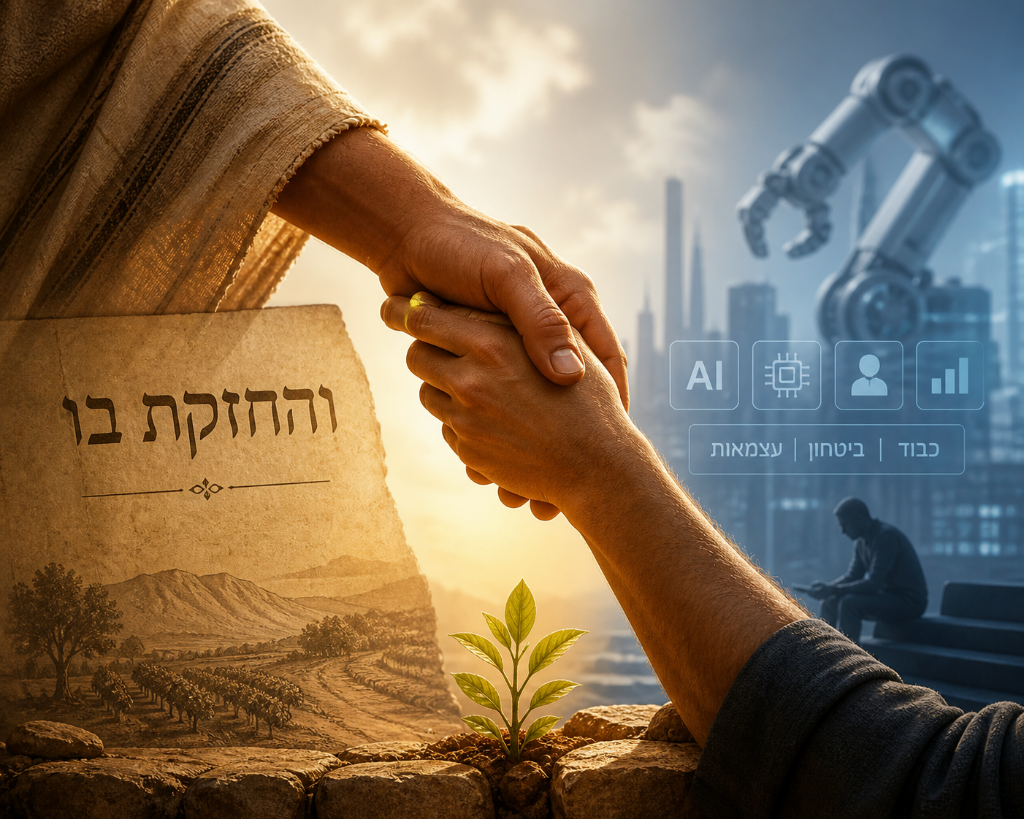
With the rise of artificial intelligence, the question of what makes humans unique has returned to the center of debate. Does the "Image of God" collapse when an algorithm imitates language, creativity, and morality? Three philosophical-Jewish interpretive paths.
"And God created man in His own image, in the image of God He created him"
(Genesis 1:27)
One of the deepest concepts in the Jewish-Christian tradition is "Tzelem Elohim" (Image of God) — the idea that man was created in the image of the Divine. For thousands of years, the interpretation of this concept has been a philosophical-theological battleground: Does it refer to intellect? Creativity? Free will? Moral responsibility?
Maimonides, at the opening of the "Guide for the Perplexed," already knew the question was dangerous: he explains that the "image" is not physical at all, but refers to the intellectual form, the Active Intellect that distinguishes man from the animal. Yet even Maimonides could not have imagined a being that reasons without living, that calculates without suffering, that answers without understanding.
Today, with the rise of artificial intelligence, the question has returned to the center of debate with an entirely new urgency.
The classical argument was that humans are unique because of capacities once considered exclusively theirs: language, reasoning, creativity, morality. But now an algorithm imitates language convincingly. It composes music, writes poetry, diagnoses illness, conducts what appears to be an intimate conversation. If "Image of God" was defined by capabilities, and those capabilities can now be replicated, does the concept collapse?
The poet Paul Valéry wrote as early as 1939: "The trouble with our times is that the future is not what it used to be." He was not, of course, speaking of AI — but he identified something profound: every era assumes there is a boundary that will not be breached, and then the boundary is breached, and humanity must reinvent itself.
Three Interpretive Paths
The Body, Time, and Finitude
Man lives within time and place, body and death. He is hungry, ill, in love, mortal. Artificial intelligence does not live — it processes. Martin Heidegger called this Sein-zum-Tode, "Being-toward-death," and argued that it is precisely the awareness of finitude that opens before man the possibility of authentic life. One who cannot die cannot truly choose. Perhaps it is the very vulnerability of the human being that defines the Image: not capability, but risk.
Responsibility and Guilt
AI cannot be guilty. It can err, but it cannot sin. Emmanuel Levinas taught us that morality is not a system of rules but a face — the encounter with the Other that demands an immediate response. "Le visage d'autrui me met en question" — the face of the other poses a question from which there is no escape. An algorithm can recognize faces; it cannot be questioned by them.
Subjective Experience
Even if AI were to simulate every human behavior, there would always remain the gap that philosopher David Chalmers called "the hard problem of consciousness" — the question of why there is any inner experience at all, rather than mere information processing. The pain I feel cannot be coded. William James wrote: "The greatest revolution of our generation is the discovery that human beings, by changing the inner attitudes of their minds, can change the outer aspects of their lives." This interiority — which shifts, which experiences, which regrets — may be the last stronghold of the Divine Image.
The Real Danger
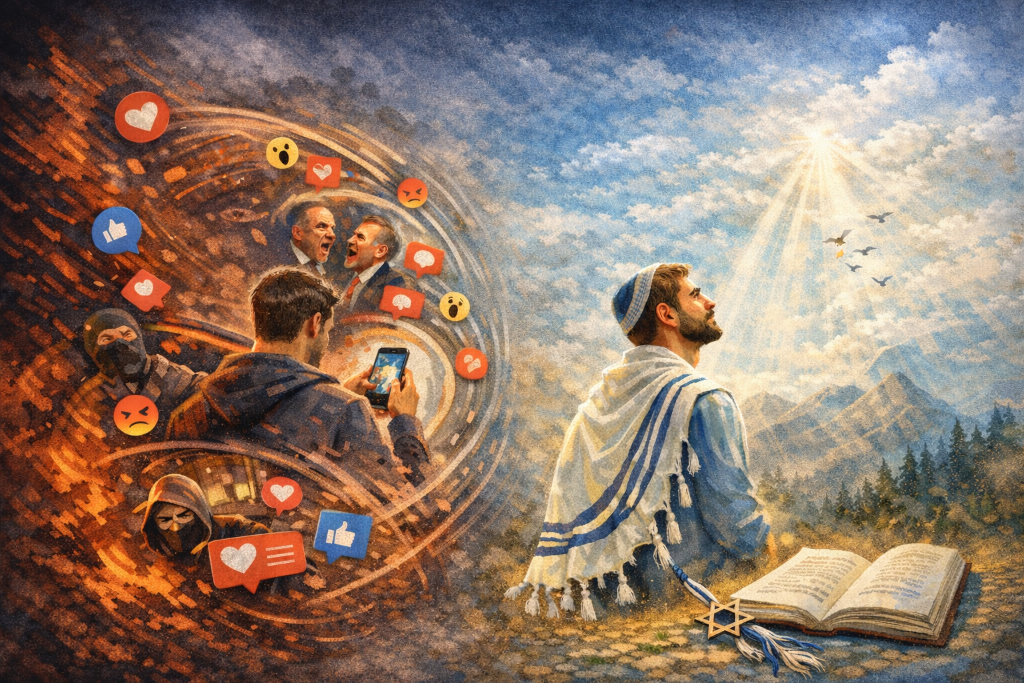
Not that AI will become human, but that humans will become algorithmic.
This is the greater threat. Not that the machine will acquire a soul, but that the human will behave more and more like a machine: optimizing output, minimizing friction, maximizing stimulation. The English philosopher Michael Sandel wrote about "the genetic fix" — the desire to improve humanity to the point of abolishing it — and argued that what we lose along the way is not only uniqueness but humility, the recognition that not everything can be controlled and planned.
When the algorithm feeds us content chosen to bore us a little less, it does not destroy the "Image of God" from the outside — it simply offers us the chance to quietly, willingly surrender it from within.
"We shape our tools, and thereafter our tools shape us" — John Culkin
The Image as a Demand, Not a Gift
Rabbi Joseph Soloveitchik, in "Halakhic Man," described two Adams: "Adam the First," the creative man, the builder, the one who masters nature, and "Adam the Second," the fallen man, who seeks connection and meaning. Both, he said, are necessary. Technology has always served Adam the First magnificently. The question is what we do with Adam the Second.
Perhaps "Image of God" was never intended to be a biological fact, but an invitation: to be a being capable of sublimity, of choice, of responsibility, of love that is not calculated. Artificial intelligence does not threaten the Image — it exposes it. It shows us precisely what can be replicated, and in doing so compels us to ask: what, if anything, cannot?
This is the great religious-philosophical question of the 21st century.
And we, not surprisingly, still do not know the answer — and that, perhaps, is exactly the sign.